
📅 Published: December 18, 2025
Understanding System Prompts and AI Tool Models
FREE DOWNLOAD
The 2026 AI Toolkit: 30 Free Tools to Start Earning Online
Get the exact tools 6-figure AI solopreneurs use - curated, ranked, and free to start.
No spam. Unsubscribe anytime. Sent to 4,200+ US solopreneurs.
What Are System Prompts?
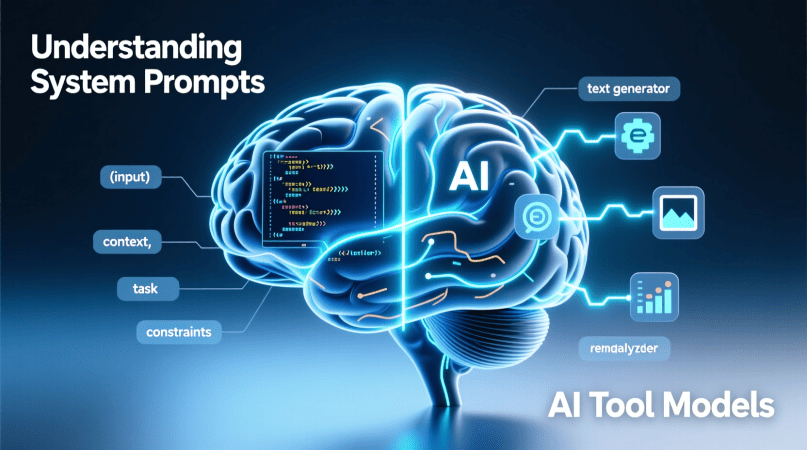
System prompts are essentially instructions or queries given to AI systems to elicit specific responses or actions. They serve as the bridge between human intentions and machine processing. To dive deeper into this topic, you can refer to our related article: What are System Prompts in AI?.
How System Prompts Work
Imagine you are interacting with a virtual assistant. When you ask it to set a reminder, the underlying mechanism involves a system prompt that interprets your request. Here’s a simple breakdown of how it functions:
- User Input: The user provides a command or question.
- Prompt Generation: The AI analyzes the input to create a relevant prompt.
- Response Processing: The AI retrieves information or actions based on the prompt.
- Output Delivery: The AI presents the result to the user.
The Role of AI Tool Models in Natural Language Processing
AI tool models are the backbone of natural language processing (NLP). They are algorithms designed to understand, interpret, and generate human language in a meaningful way. For a comprehensive overview of this subject, check out our related article: The Role of AI Tool Models in Natural Language Processing.
Components of AI Tool Models
AI models consist of various components that work in harmony to process language:
| Component | Description |
|---|---|
| Data Input | The raw data or text that the model will process. |
| Preprocessing | Cleaning and organizing the data for analysis. |
| Model Training | The phase where the model learns patterns from the data. |
| Inference | Generating responses or predictions based on new inputs. |
Types of AI Models: A Comprehensive Overview
AI models can vary significantly in their architecture and application. From deep learning networks to simpler statistical models, understanding these types is essential for leveraging AI effectively. For more insights, visit our related article: Types of AI Models: A Comprehensive Overview.
Common Types of AI Models
- Supervised Learning: Models that learn from labeled data.
- Unsupervised Learning: Models that find patterns in unlabeled data.
- Reinforcement Learning: Models that learn through trial and error.
- Transformers: Highly effective for NLP tasks, these models use attention mechanisms.
How to Design Effective Prompts for AI Tools
Creating effective system prompts is an art that can significantly influence the quality of AI responses. A well-structured prompt can lead to more accurate and relevant outputs. For practical guidance, refer to our related article: How to Design Effective Prompts for AI Tools.
Checklist for Designing Effective Prompts
- Be Clear: Use simple language and avoid ambiguity.
- Be Specific: Include details that can help the AI understand the context.
- Guide the Response: Indicate the desired format or type of response.
- Test Variations: Experiment with different phrasings to see which yields the best results.
Case Studies: Successful Implementation of AI Tools
Real-world examples can shed light on how system prompts and AI tool models function in practice. Companies across various sectors have successfully integrated AI into their operations. For more detailed cases, visit our related article: Case Studies: Successful Implementation of AI Tools.
Example: Customer Service Automation
A leading e-commerce company implemented an AI-driven customer service tool. By designing specific system prompts, they were able to reduce response times and improve customer satisfaction. Here’s how they did it:
- Identified common customer queries.
- Crafted targeted prompts for each query type.
- Trained the AI model using historical interaction data.
- Launched the tool and continuously monitored feedback to refine prompts.
Future Trends in AI Prompt Engineering
The field of AI is constantly evolving, and prompt engineering is no exception. Understanding the future trends can help organizations stay ahead. For insights into upcoming changes, check our related article: Future Trends in AI Prompt Engineering.
Emerging Trends to Watch
- Personalization: Tailoring prompts based on user behavior and preferences.
- Multimodal Prompts: Combining text with images or audio for richer interactions.
- Context Awareness: Designing prompts that adapt based on previous interactions.
- Automated Prompt Generation: Utilizing AI to create more effective prompts based on data analysis.
Conclusion
Understanding system prompts and AI tool models is crucial for anyone looking to harness the power of AI effectively. By mastering the art of prompt design and familiarizing oneself with different AI models, businesses and individuals can unlock new possibilities in automation, customer interaction, and data analysis. As AI continues to advance, staying informed about these elements will be key to leveraging technology for success.
Continue Reading

Written by
George - Founder, Scalopa
George has been building AI-powered income systems since 2023. He tests AI tools hands-on and tracks real income data from 100+ US solopreneurs. All guides on Scalopa are based on direct testing or verified community data.