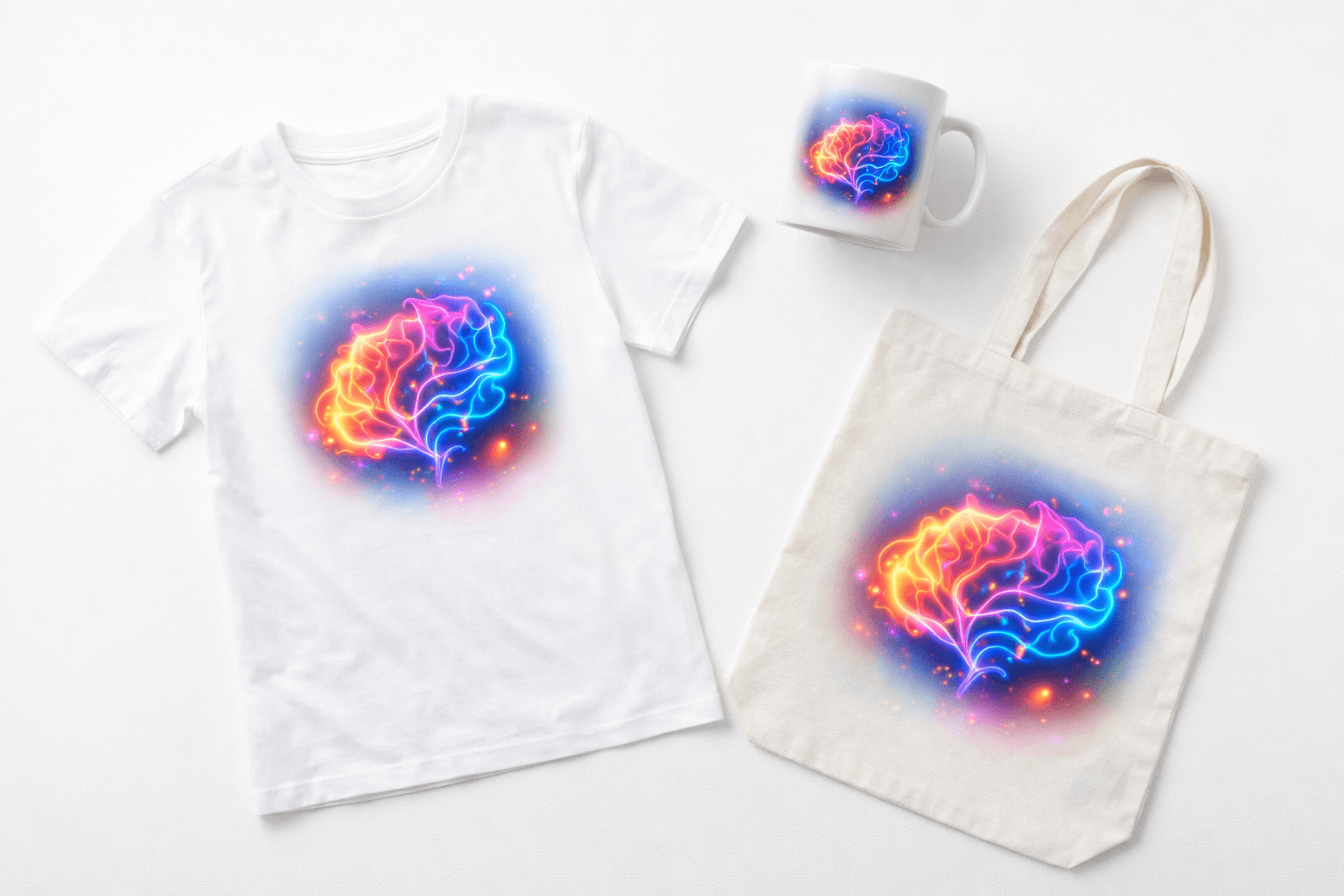
Introduction: The volume vs. quality dilemma
Print On Demand (POD) is not a new business model, but AI has completely changed the math
In the past, the limiting factor was your ability to draw. If you wanted to sell a design of a “Retro Synthwave Cat,” you had to draw it. If it didn’t sell, you lost hours of work. Today, you can generate that same design in 60 seconds
However, this ease of creation has led to a flooded market. Redbubble and Etsy are drowning in low-effort, generic AI art. To succeed now, you cannot simply be a “generator.” You must be a “Curator” and a “Marketer”
This article explores how to leverage AI-driven income streams to build a POD business that actually stands out in a crowded marketplace
Step 1: Niche hunting (the “inch wide, mile deep” strategy)
The biggest mistake beginners make is uploading generic art. “Beautiful Sunset” will never be found. You need to target “Micro-Niches”
-
Don’t target: “Dogs”
-
Target: “Introverted Corgi Moms who love Coffee”
Use ChatGPT to brainstorm these cross-sections. Ask it: “Give me 20 funny t-shirt slogans combining the hobbies of ‘Gaming’ and ‘Gardening’.” The results (e.g., “AFK: I’m in the Garden”) become your design prompts
Step 2: The resolution trap (upscaling is mandatory)
This is the technical hurdle that fails 90% of AI sellers
Midjourney and DALL-E generate images at roughly 1024×1024 pixels
-
The Problem: To print a clear image on a large T-shirt, you generally need 4500×5400 pixels at 300 DPI
-
The Result: If you upload the raw AI file, the shirt will look blurry and pixelated. You will get returns and bad reviews
The Solution: You must use AI Upscalers. Tools like Topaz Gigapixel AI or online alternatives (like BigJPG) use algorithms to “invent” new pixels, making your image 4x larger without losing quality. This step is non-negotiable
Step 3: Platform strategy
-
Redbubble / Teepublic: Great for beginners. They handle the traffic and the website. Margins are lower, but it is true “upload and forget” passive income
-
Etsy + Printify: For serious sellers. You integrate a production partner (Printify) with your Etsy storefront. You have to handle customer service and SEO, but you keep a much larger slice of the profit
Step 4: The legal gray area
Can you sell AI art? Yes. Can you copyright AI art? Currently, mostly no
This means you cannot sue someone for copying your AI image. However, the bigger risk is Trademark Infringement
-
Do not generate Mickey Mouse
-
Do not generate lyrics from Taylor Swift songs
Always use a tool like TESS (Trademark Electronic Search System) to check your slogans before uploading
Conclusion: From Digital to Physical
The magic of POD is that you hold no inventory. You are testing ideas against the market at zero cost. Once you find a winning design, you can easily expand. A hit design on a T-shirt can be repurposed into a digital sticker or planner cover a strategy we discuss in our guide on [selling AI digital products]
Start with the niche. Let AI handle the art. Upscale for quality
2 thoughts on “AI art for Print On Demand: Scaling your Redbubble and Etsy store”
Comments are closed.