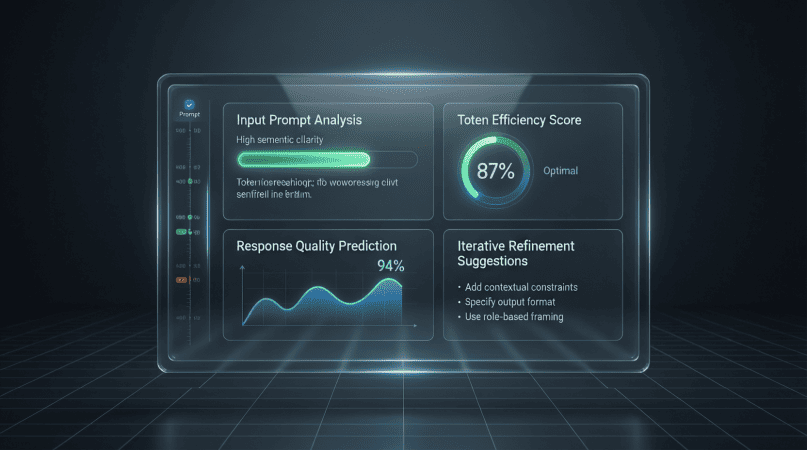
Understanding Prompt Engineering
Hey there! If you’ve ever dabbled in artificial intelligence (AI) or natural language processing (NLP), you might have heard the term “Prompt Engineering” bouncing around like a supercharged ping pong ball. In this article, we’ll break it down in a way that’s easy to digest, even if you’re just getting your feet wet in the world of AI.
What is Prompt Engineering?
Prompt engineering is all about crafting the right questions or commands to get the best possible responses from AI models, especially language models like GPT-3, GPT-4, or other similar systems. Think of it like talking to a really smart friend who sometimes needs a little direction. The better your prompts, the more meaningful and relevant the responses.
In this section about What is Prompt Engineering?, you can find detailed explanations and guides. See more at What is Prompt Engineering?.
The Importance of Prompt Engineering in AI
Why should you care about prompt engineering? Well, if you’re looking to leverage AI for anything from creative writing to complex data analysis, understanding prompt engineering is crucial. It can significantly impact the quality of the output you receive. Poor prompts can lead to vague, irrelevant, or even incorrect responses, while well-crafted prompts can elicit insightful and precise information.
In this section about The Importance of Prompt Engineering in AI, you can find detailed explanations and guides. See more at The Importance of Prompt Engineering in AI.
Techniques for Effective Prompt Engineering
Let’s dive into some techniques that can help you master prompt engineering. Here are a few tips to get you started:
- Be Specific: The more details you provide, the better the AI can understand what you’re looking for. For example, instead of asking, “Tell me about dogs,” try “What are the top five most popular dog breeds in the U.S. and why?”
- Use Examples: If you’re looking for a certain style of response, provide examples. For instance, if you need a formal email, you could say, “Write a formal email requesting a meeting, similar to this: [insert example].”
- Iterate and Experiment: Don’t settle on the first prompt you come up with. Tweak it, change a few words, and see how the AI responds. Sometimes a slight adjustment can lead to a significantly better answer.
- Utilize Constraints: Setting limits can help refine the output. For example, you might ask for a summary in three bullet points or a response of no more than 150 words.
In this section about Techniques for Effective Prompt Engineering, you can find detailed explanations and guides. See more at Techniques for Effective Prompt Engineering.
Common Challenges in Prompt Engineering
Even seasoned pros can run into issues with prompt engineering. Here are some common challenges you might face:
- Ambiguity: If your prompt isn’t clear, the AI might misinterpret it. Always strive for clarity.
- Lack of Context: AI models don’t have inherent knowledge beyond what they were trained on. Providing context is essential.
- Overfitting Responses: Sometimes, you might get a response that’s too tailored to your previous prompts, making it less relevant for new queries.
In this section about Common Challenges in Prompt Engineering, you can find detailed explanations and guides. See more at Common Challenges in Prompt Engineering.
Case Studies: Successful Prompt Engineering Applications
Real-world applications of prompt engineering can be fascinating. Here’s a quick look at a few case studies:
| Application | Description | Outcome |
|---|---|---|
| Content Creation | A marketing team used prompt engineering to generate blog outlines for various topics. | Increased productivity by 30% and improved content quality. |
| Customer Service | Businesses utilized AI to respond to customer queries using well-crafted prompts. | Reduced response time by 50% and enhanced customer satisfaction. |
| Education | Teachers designed prompts to help students generate creative stories. | Boosted students’ creativity and engagement in writing tasks. |
In this section about Case Studies: Successful Prompt Engineering Applications, you can find detailed explanations and guides. See more at Case Studies: Successful Prompt Engineering Applications.
Future Trends in Prompt Engineering
As AI technology evolves, so does the art of prompt engineering. Here are some trends to keep an eye on:
- Increased User Adaptability: AI will become better at understanding user intent, making prompts more intuitive.
- Multimodal Prompts: Combining text, images, and even voice commands will become more common.
- Automated Prompt Suggestions: AI systems might begin offering prompt suggestions based on user behavior.
In this section about Future Trends in Prompt Engineering, you can find detailed explanations and guides. See more at Future Trends in Prompt Engineering.
Conclusion
Prompt engineering might seem like a niche skill, but it’s becoming increasingly vital as AI continues to integrate into various aspects of our lives. Whether you’re a developer, content creator, or just a curious mind, mastering this skill can unlock incredible potential. So, dive in, experiment, and see how you can harness the power of AI through effective prompts!
4 thoughts on “Understanding Prompt Engineering”
Comments are closed.