
📅 Last updated: June 9, 2026 | Originally published: January 20, 2026
How AI is Revolutionizing Digital Advertising
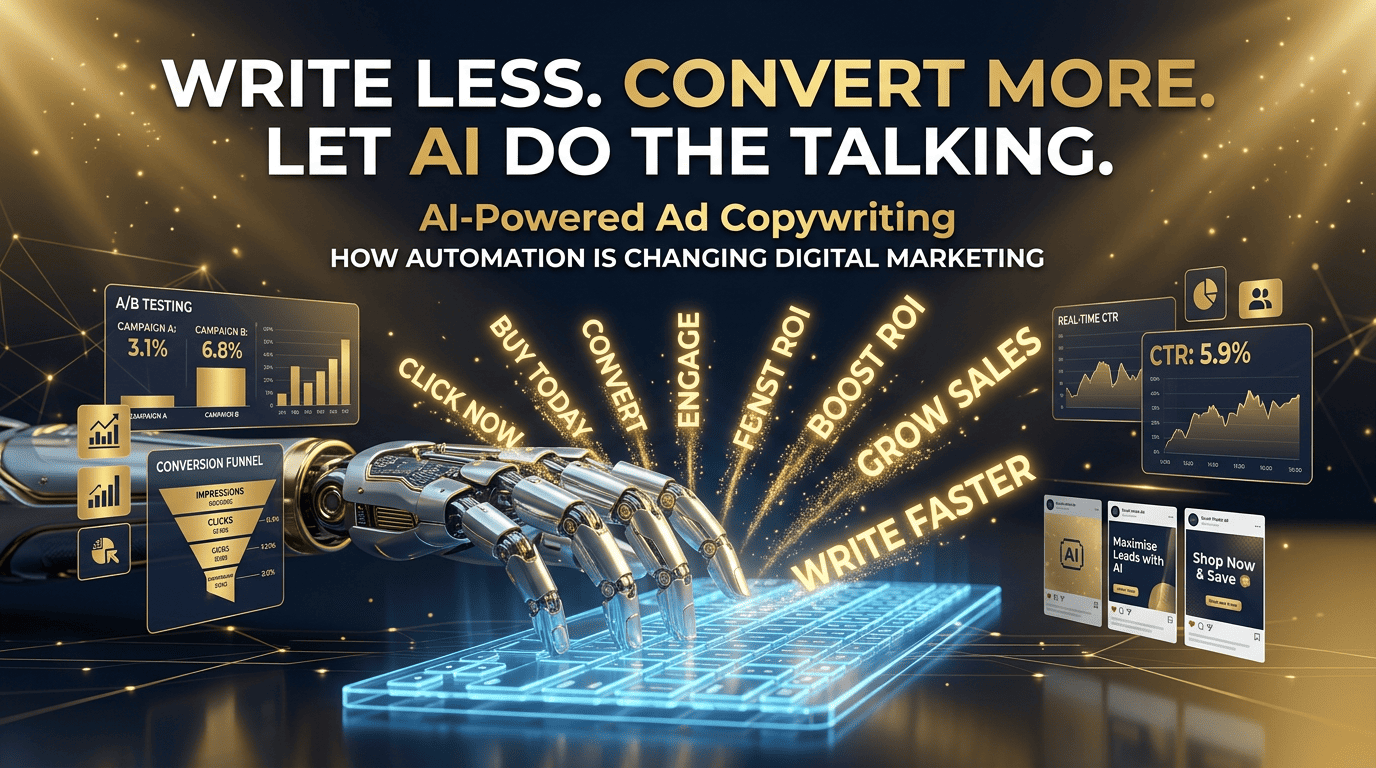
Creating effective ad copy is one of the most important yet challenging aspects of digital marketing. The right words can capture attention, engage audiences, and drive conversions. However, writing compelling advertisements consistently across multiple platforms demands time, creativity, and continuous testing. This is where automation powered by Artificial Intelligence (AI) comes into play. Automating ad copywriting is transforming how businesses craft their marketing messages, making the process faster, more efficient, and often more effective.
FREE DOWNLOAD
The 2026 AI Toolkit: 30 Free Tools to Start Earning Online
Get the exact tools 6-figure AI solopreneurs use - curated, ranked, and free to start.
No spam. Unsubscribe anytime. Sent to 4,200+ US solopreneurs.
In this article, we will explore how AI-driven tools are automating ad copywriting, the benefits of automation, key tools available today, and best practices for integrating these technologies into your marketing strategy.
Why Automate Ad Copywriting?
Manual ad copywriting involves brainstorming, drafting, editing, and testing, which can be labor-intensive and prone to human bias. Automation helps solve several pain points:
Speed and scalability: AI can generate multiple ad variations quickly, enabling rapid testing and optimization across channels.
Data-driven insights: AI analyzes audience behavior and engagement data to craft messages that resonate better.
Consistency: Automation ensures brand voice remains consistent even across hundreds of ads.
Cost efficiency: Reducing the time and effort required lowers costs, especially for agencies managing many clients.
Automating ad copywriting empowers marketers to focus more on strategy and creativity while relying on AI to handle repetitive and data-intensive tasks.
How AI Automates Ad Copywriting
Natural Language Generation (NLG)
NLG is a branch of AI that creates written content from data inputs. In advertising, NLG algorithms can produce headlines, descriptions, and calls to action tailored to specific audiences based on keywords, product features, and campaign goals. This allows for rapid generation of thousands of ad variants.
Machine Learning Optimization
Machine learning models continuously analyze which ad copies perform best. They learn patterns in user engagement and conversion data to refine future copy suggestions. This adaptive learning makes automated ad copy smarter over time.
Personalization at Scale
AI can customize ad copy for different audience segments automatically, taking into account demographics, location, past behavior, and preferences. Personalized ads tend to have higher relevance and better conversion rates.
Top AI Tools for Automating Ad Copywriting
Jasper AI
Jasper AI is a popular AI writing assistant that generates marketing copy, including ads, social media posts, and emails. It offers templates tailored for ad copywriting and can produce variations quickly.
Copy.ai
Copy.ai specializes in creative content generation using AI. Its ad copy generator provides headline ideas, descriptions, and taglines designed to engage specific customer personas.
Phrasee
Phrasee focuses on generating brand-compliant marketing language that maximizes engagement. Its AI platform optimizes ad copy for email, social media, and paid ads, learning from past campaign performance.
Writesonic
Writesonic uses GPT-4 based technology to create high-quality ad copy in seconds. It supports multiple languages and can tailor tone and style to fit the brand’s voice.
Best Practices for Using Automated Ad Copywriting
Combine AI with Human Creativity
While AI excels at generating options and testing rapidly, human oversight is essential to ensure that the copy aligns with brand values and messaging. Use AI as a tool, not a replacement for marketers.
Test Multiple Variations
Take advantage of automation to run A/B or multivariate tests with many ad variants. Analyze results to identify what resonates best with different audiences.
Keep Context in Mind
Make sure the AI-generated copy suits the platform and audience context. What works on Facebook might not perform on Google Ads or LinkedIn.
Continuously Train Your AI Tools
Provide feedback and data from your campaigns to help the AI improve its copy suggestions. The more data it receives, the better it gets.
Challenges of Automating Ad Copywriting
Despite its advantages, automation has limitations:
Risk of generic or repetitive copy: Without careful input and oversight, AI can produce dull or formulaic text.
Lack of emotional nuance: AI may struggle to convey deep emotional appeals or humor effectively.
Dependence on quality data: Poor input data leads to poor output. Success depends on accurate, relevant training data.
Balancing automation with human creativity remains critical.
The Future of Automated Ad Copywriting
As AI technology evolves, we can expect:
More sophisticated emotional intelligence in AI writing tools, enabling nuanced and empathetic copy.
Integration of voice and video ad script generation alongside text ads.
Greater real-time optimization with AI adjusting copy dynamically based on live campaign data.
Automation will continue to empower marketers, freeing them from tedious tasks and helping them deliver more personalized, impactful advertising.
Conclusion
Automating ad copywriting with AI tools is a game-changer for digital marketing. It accelerates the content creation process, improves scalability, and enables data-driven optimization. However, the best results come from combining AI’s speed and analytical power with human creativity and strategic thinking. By embracing automation thoughtfully, marketers can produce compelling ads that resonate deeply and convert effectively.
Continue Reading




Written by
George - Founder, Scalopa
George has been building AI-powered income systems since 2023. He tests AI tools hands-on and tracks real income data from 100+ US solopreneurs. All guides on Scalopa are based on direct testing or verified community data.