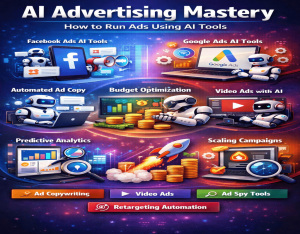
How to Run Ads Using AI Tools
The digital advertising landscape is transforming at a breakneck pace, and artificial intelligence (AI) has become an indispensable tool for marketers striving to maximize their campaign effectiveness. Whether you are a small business owner or an experienced digital marketer, incorporating AI into your advertising strategies is no longer optional but essential to keep up with competitors and evolving consumer behaviors. AI tools have revolutionized how campaigns are created, targeted, optimized, and scaled, delivering greater efficiency and improved results. This article explores the comprehensive process of running ads using AI tools, covering ten critical areas that will help you unlock the full potential of AI-driven advertising.
AI Tools for Facebook Ads
Facebook remains one of the most dominant advertising platforms worldwide, boasting billions of users and advanced targeting capabilities. The platform itself integrates AI into its advertising system to optimize campaigns automatically. For instance, Facebook’s Automated Ads utilize machine learning algorithms to create various ad combinations and determine which perform best based on audience interaction, engagement, and conversion metrics. Additionally, third-party AI tools such as AdEspresso, Revealbot, and Smartly.io further empower advertisers by offering sophisticated automation features, real-time performance analysis, and budget reallocation based on AI-driven insights. These tools can dynamically adjust bidding strategies and target micro-segments within Facebook’s vast audience pool to maximize reach and ROI. AI also assists in generating creative suggestions by analyzing past ad performance data, enabling advertisers to design better visuals and copy that resonate with their audience. By leveraging these AI tools, advertisers save significant time and resources while continuously improving campaign outcomes.
AI Tools for Google Ads
Google Ads provides access to a massive network spanning search results, display ads, YouTube video ads, and more. Google’s AI-powered Smart Bidding strategies—such as Target CPA (Cost Per Acquisition), Target ROAS (Return on Ad Spend), and Maximize Conversions—use machine learning to optimize bids in real time, ensuring ads are shown to users most likely to convert within your budget constraints. Responsive Search Ads, another AI feature, automatically test multiple headlines and descriptions to identify the best-performing combinations, improving click-through rates and conversion potential. Beyond Google’s native tools, third-party AI platforms like WordStream, SEMrush, and Optmyzr offer enhanced data analytics, competitor intelligence, and automated campaign management functionalities. These tools analyze keyword trends, adjust bids dynamically, and provide actionable recommendations to improve campaign structure and targeting. Utilizing AI within Google Ads eliminates much of the guesswork traditionally associated with campaign management and helps advertisers reach high-intent audiences efficiently.
Automating Ad Copywriting
Crafting compelling ad copy is a challenge that many advertisers face, especially when attempting to personalize messages for different audience segments. AI-powered copywriting tools such as Jasper AI, Copy.ai, and Writesonic leverage advanced natural language processing (NLP) to generate persuasive and contextually relevant ad texts in seconds. These tools analyze vast datasets of successful advertisements and customer responses to produce variations of headlines, descriptions, and calls to action that align with your brand’s voice and objectives. Automation in copywriting accelerates the testing of multiple ad variants, enabling marketers to identify which messages resonate best with specific demographics or user behaviors. Moreover, AI can adapt messaging dynamically based on user interactions or seasonality, maintaining relevance and increasing engagement rates. This reduces creative bottlenecks and allows marketers to focus on strategy and optimization rather than content creation.
How AI Optimizes Budget
Managing advertising budgets effectively is critical for maximizing campaign profitability. Traditional budget management requires constant monitoring and manual adjustments, which can be inefficient and prone to errors. AI-driven budget optimization tools transform this process by dynamically reallocating funds to the best-performing campaigns, ad sets, or even individual ads based on real-time data analysis. These algorithms consider numerous factors, including conversion rates, cost per click, audience responsiveness, and market fluctuations, to adjust spending in a way that maximizes returns while minimizing waste. For example, if an ad is delivering conversions at a lower cost than others, AI can automatically increase its budget allocation. Conversely, underperforming ads receive reduced funding or are paused altogether. Platforms like Facebook and Google integrate automated bidding and budget controls, but specialized AI tools can combine insights from multiple channels to manage budgets holistically, ensuring the most effective use of advertising dollars across all campaigns.
AI Tools for Video Ads
Video advertising continues to grow in popularity due to its high engagement and storytelling potential, but producing quality videos can be resource-intensive. AI-powered video creation platforms such as Lumen5, Magisto, and InVideo drastically simplify video production by automating tasks like editing, scene selection, animation, and soundtrack integration. These platforms analyze your content and brand guidelines to generate polished videos within minutes, removing the need for extensive editing skills or large budgets. Beyond creation, AI also plays a role in video ad optimization. It tracks viewer behavior metrics such as watch time, drop-off points, and engagement levels, providing insights that guide improvements in video length, content focus, and call-to-action placements. Additionally, AI can optimize video distribution by identifying the best placements and times to reach your target audience, ensuring maximum impact. This combination of AI-driven creation and optimization empowers marketers to leverage video ads effectively, even with limited resources.
Predictive Analytics for Ads
Predictive analytics powered by AI uses historical and real-time data to forecast future trends, consumer behaviors, and campaign outcomes. By applying machine learning models, advertisers can identify which audience segments are most likely to engage or convert, the optimal times for ad delivery, and the offers or creatives that will generate the highest ROI. Platforms like Google Analytics, HubSpot, and Adobe Experience Cloud incorporate predictive capabilities that help marketers make data-driven decisions with greater confidence. Predictive analytics reduce reliance on trial-and-error approaches by providing actionable forecasts, enabling advertisers to anticipate market shifts and customer preferences. These insights allow for proactive campaign adjustments that can increase efficiency and effectiveness, ultimately driving better results while reducing wasted ad spend.
AI for Scaling Campaigns
Scaling successful advertising campaigns manually can be complex and time-consuming, involving constant testing, audience research, and creative iterations. AI streamlines the scaling process by automatically identifying and targeting lookalike audiences—groups of users who exhibit behaviors similar to your best customers. AI tools can generate new ad variations optimized for different demographics, regions, or platforms and test them rapidly to determine which combinations perform best at scale. Furthermore, AI monitors campaign performance continuously, reallocating budgets and adjusting bids dynamically to sustain profitability as campaigns expand. By automating these tasks, marketers can grow their reach without compromising efficiency or overspending. This ability to scale intelligently using AI helps businesses tap into new markets quickly and with greater precision.
Common Ad Mistakes AI Can Fix
Despite careful planning, advertisers often make common mistakes such as poor audience targeting, ineffective bidding strategies, irrelevant creatives, or mismatches between ads and landing pages. AI-powered platforms excel at identifying these issues early by analyzing campaign data for signs like low click-through rates, high cost per acquisition, or poor user engagement. Upon detection, AI suggests actionable fixes such as narrowing or refining target audiences, improving ad copy, adjusting bids, or optimizing landing pages to ensure message consistency. Some AI tools even automate these corrections directly, continuously improving campaigns without manual intervention. By mitigating these typical errors, AI increases ad relevance, boosts user experience, and enhances overall campaign performance, saving time and reducing wasted budget.
Best AI Ad Spy Tools
Staying informed about competitors’ advertising strategies is crucial for maintaining a competitive edge. AI-powered ad spy tools such as Adbeat, BigSpy, and SocialPeta gather and analyze data from various ad platforms in real time, revealing insights into competitors’ ad creatives, budgets, targeting tactics, and campaign performance. These tools use AI to filter and highlight the most relevant and successful ads, enabling marketers to identify industry trends, discover untapped opportunities, and avoid ineffective strategies. With continuous monitoring, advertisers receive timely alerts on competitor activity changes, allowing them to adapt and innovate quickly. AI-driven competitor intelligence helps businesses refine their own campaigns by learning from others’ successes and mistakes.
Automating Retargeting Campaigns
Retargeting campaigns aim to re-engage users who have previously interacted with your brand but did not convert, such as website visitors who abandoned shopping carts or viewed product pages without purchasing. AI automates retargeting by segmenting audiences based on specific behaviors and personalizing ads to match their engagement level and intent. For example, AI can automatically send discount offers to cart abandoners or highlight best-selling products to casual browsers. By continuously analyzing user responses, AI adjusts retargeting strategies to improve conversion rates and reduce ad fatigue. Automation eliminates the need for manual audience segmentation and creative tailoring, making retargeting more efficient and effective. This targeted approach maximizes the value of every visitor, turning interest into action.
In conclusion, AI tools have revolutionized digital advertising by automating complex tasks, optimizing performance, and providing predictive insights that empower marketers to make smarter decisions. From Facebook and Google Ads automation to copywriting, budget management, video creation, predictive analytics, campaign scaling, error correction, competitor analysis, and retargeting, AI enhances every aspect of running successful ad campaigns. Embracing these technologies enables businesses to run faster, more efficient, and more profitable campaigns than ever before. The key to success lies in carefully selecting and integrating AI tools tailored to your advertising goals and platforms, continuously testing and learning from data, and adapting strategies based on AI-driven insights. If you want assistance diving deeper into any of these AI-powered advertising areas or need custom guides, feel free to ask.