
📅 Published: December 18, 2025
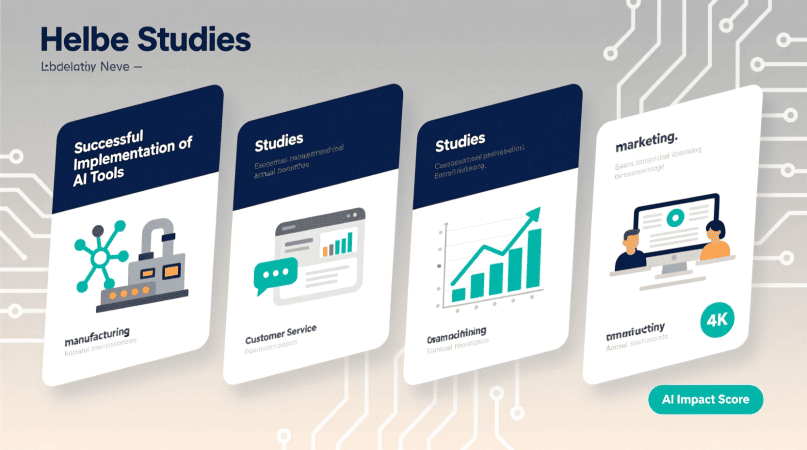
Case Studies: Successful Implementation of AI Tools
Artificial Intelligence (AI) has revolutionized various industries, transforming how businesses operate and deliver value. From healthcare to finance, AI tools are not just buzzwords; they are becoming essential components of successful strategies. In this article, we will explore several case studies that illustrate the successful implementation of AI tools, providing you with insights and practical steps to consider for your organization.
Understanding the AI Landscape
Before diving into the case studies, it’s important to have a grasp of the AI tools landscape. AI can enhance efficiency, improve decision-making, and foster innovation. But what does it mean to implement AI tools successfully? Let’s break it down.
FREE DOWNLOAD
The 2026 AI Toolkit: 30 Free Tools to Start Earning Online
Get the exact tools 6-figure AI solopreneurs use - curated, ranked, and free to start.
No spam. Unsubscribe anytime. Sent to 4,200+ US solopreneurs.
What Makes AI Implementation Successful?
- Clear Objectives: Establish specific goals that align with your business strategy.
- Stakeholder Engagement: Involve all relevant parties from the beginning to ensure buy-in and smooth adoption.
- Data Quality: Ensure access to high-quality data, as AI thrives on good data.
- Continuous Learning: Be prepared to iterate and improve your AI systems based on feedback and performance metrics.
Case Study 1: Healthcare Transformation at Mayo Clinic
Mayo Clinic is a shining example of how AI tools can enhance patient care. In their pursuit to improve diagnostic accuracy, they implemented an AI-powered imaging analysis tool.
Implementation Steps
- Identifying the Need: Mayo Clinic recognized that radiologists were overwhelmed with the volume of scans.
- Choosing the Right Tool: They partnered with an AI company to develop a custom imaging analysis tool.
- Training the AI: The AI was trained on thousands of images to recognize patterns indicative of various conditions.
- Pilot Testing: They conducted pilot tests to evaluate the tool’s performance compared to human specialists.
- Full Implementation: After successful trials, the tool was integrated into the radiology workflow.
Results
The AI tool successfully reduced the time taken for diagnosis by 30%, allowing radiologists to focus on more complex cases. Additionally, diagnostic accuracy improved, leading to better patient outcomes.
Case Study 2: AI in Financial Services – JPMorgan Chase
In the financial sector, AI tools are reshaping how institutions manage risk and customer relations. JPMorgan Chase implemented AI-driven chatbots to streamline customer service.
Implementation Steps
- Identifying Pain Points: Customer service representatives were frequently answering repetitive questions.
- Selecting a Solution: They decided to develop an AI chatbot capable of handling common inquiries.
- Training the Model: The chatbot was trained on historical chat logs to recognize and respond to customer inquiries.
- Testing and Feedback: Initial deployment involved monitoring interactions and gathering customer feedback.
- Iteration: The chatbot was continuously refined based on customer interactions.
Results
Within a year, the chatbot handled over 1 million inquiries, relieving pressure on human agents and significantly improving response times. Customer satisfaction rates increased, demonstrating the effectiveness of AI in enhancing customer service.
Case Study 3: Retail Innovation at Walmart
Walmart, a retail giant, has leveraged AI for inventory management, using machine learning algorithms to predict demand and enhance supply chain efficiency.
Implementation Steps
- Recognizing Opportunities: Walmart realized that overstocking and stockouts were significant issues affecting sales.
- Building the AI Model: They developed machine learning models to analyze sales data and predict future demand.
- Integration with Supply Chain: The AI was integrated into their existing supply chain management systems.
- Training and Testing: The model was tested across various locations to evaluate its accuracy.
- Full Rollout: After successful pilot testing, the AI system was deployed across all stores.
Results
The implementation led to a 10% reduction in inventory costs and a notable decrease in stockouts, improving the overall shopping experience for customers.
Checklist for Successful AI Implementation
| Step | Action Item | Status |
|---|---|---|
| 1 | Define clear objectives | ✔️ |
| 2 | Engage stakeholders | ✔️ |
| 3 | Assess data quality | ✔️ |
| 4 | Choose the right tool | ✔️ |
| 5 | Conduct thorough testing | ✔️ |
| 6 | Iterate and improve | ✔️ |
Final Thoughts
The case studies of Mayo Clinic, JPMorgan Chase, and Walmart highlight the transformative potential of AI tools when implemented thoughtfully. Each organization faced unique challenges but shared a common approach: a commitment to understanding their needs, engaging stakeholders, and iterating based on real-world feedback.
As you consider implementing AI tools in your organization, remember that success lies in clear objectives, quality data, and a willingness to adapt. For more insights on AI tools, check out our article on Understanding System Prompts and AI Tool Models.
By learning from these case studies, you can better navigate your AI journey and harness the power of technology to drive success.
Continue Reading
Written by
George - Founder, Scalopa
George has been building AI-powered income systems since 2023. He tests AI tools hands-on and tracks real income data from 100+ US solopreneurs. All guides on Scalopa are based on direct testing or verified community data.