
📅 Published: December 18, 2025
What are System Prompts in AI?
FREE DOWNLOAD
The 2026 AI Toolkit: 30 Free Tools to Start Earning Online
Get the exact tools 6-figure AI solopreneurs use - curated, ranked, and free to start.
No spam. Unsubscribe anytime. Sent to 4,200+ US solopreneurs.
Defining System Prompts
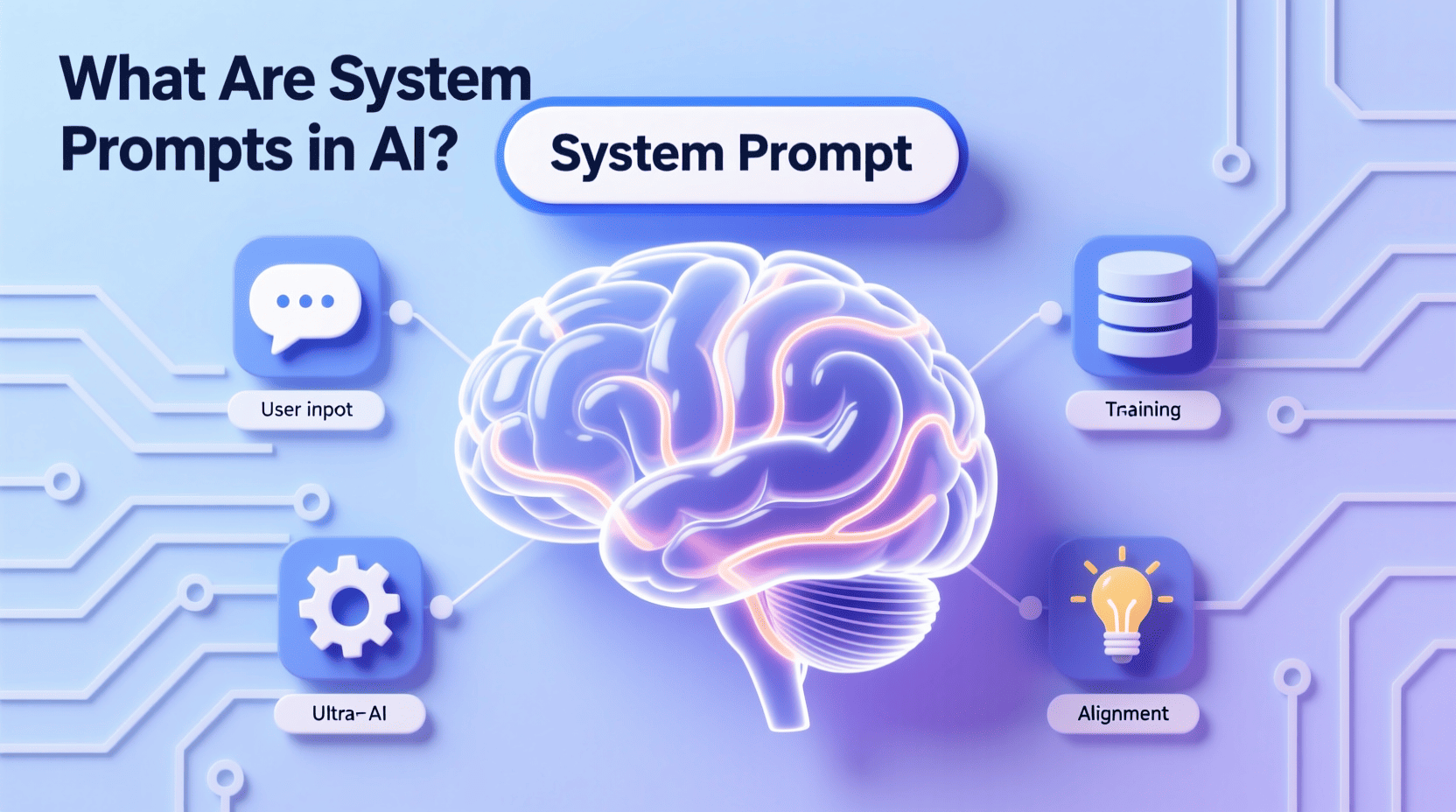
System prompts are predefined instructions or cues that guide an AI model in generating responses. These prompts set the context and tone for the conversation, helping the AI understand the user’s intent and the kind of response that would be appropriate. Think of system prompts as the guiding questions that direct the flow of dialogue between humans and machines.
The Importance of System Prompts
System prompts are crucial for several reasons:
- Contextual Understanding: They provide essential context that allows AI to generate relevant and accurate responses.
- User Engagement: Well-crafted prompts can make interactions more engaging and natural.
- Enhanced Performance: They help in reducing ambiguous responses, leading to higher satisfaction among users.
How System Prompts Work
To understand how system prompts work, let’s break down the process into a few simple steps:
- Input Recognition: The AI model receives input from the user, which could be a question, command, or statement.
- Prompt Activation: The system prompt is activated based on the input, providing context for the AI’s response.
- Response Generation: The AI processes the prompt and generates an output that aligns with the user’s intent and the context provided.
- User Feedback: The user may respond to the AI’s output, creating a loop that allows for further refinement of the interaction.
Real-Life Examples of System Prompts
Let’s take a look at some real-life examples of system prompts in action:
| Scenario | System Prompt | Expected Output |
|---|---|---|
| Customer Support | “How can I assist you today?” | User’s issue description or question. |
| Virtual Assistant | “What’s on your agenda for today?” | List of tasks or appointments. |
| Language Translation | “Translate the following sentence to Spanish:” | Translated sentence in Spanish. |
Creating Effective System Prompts
Crafting effective system prompts is an art. Here are some tips to help you create prompts that yield better results:
Checklist for Crafting System Prompts
- Be clear and concise.
- Provide specific context.
- Use natural language.
- Encourage user engagement with open-ended questions.
- Test and iterate based on user feedback.
Step-by-Step Guide to Developing System Prompts
Here’s a simple guide to help you develop your own system prompts:
- Identify the Purpose: Determine what you want the AI to achieve.
- Know Your Audience: Understand who will be interacting with the AI.
- Draft Your Prompts: Write down potential prompts and responses.
- Test the Prompts: Use the prompts in real scenarios to see how the AI responds.
- Refine Based on Feedback: Adjust your prompts based on the interactions you observe.
Challenges and Considerations
While system prompts are incredibly useful, there are challenges to be aware of:
- Ambiguity: Vague prompts can lead to unclear responses.
- User Expectations: Users may have different expectations of AI capabilities.
- Context Switching: Changing contexts can confuse the AI and lead to irrelevant outputs.
Addressing these challenges requires ongoing evaluation and refinement of the prompts used.
Conclusion
System prompts are essential tools in the AI landscape that facilitate better communication between humans and machines. By understanding their function and how to create effective prompts, you can enhance your interactions with AI, leading to more satisfying and productive experiences. For a deeper exploration of system prompts and their role in AI tool models, check out our related content on Understanding System Prompts and AI Tool Models.
Continue Reading

Written by
George - Founder, Scalopa
George has been building AI-powered income systems since 2023. He tests AI tools hands-on and tracks real income data from 100+ US solopreneurs. All guides on Scalopa are based on direct testing or verified community data.
1 thought on “What are System Prompts in AI?”
Comments are closed.