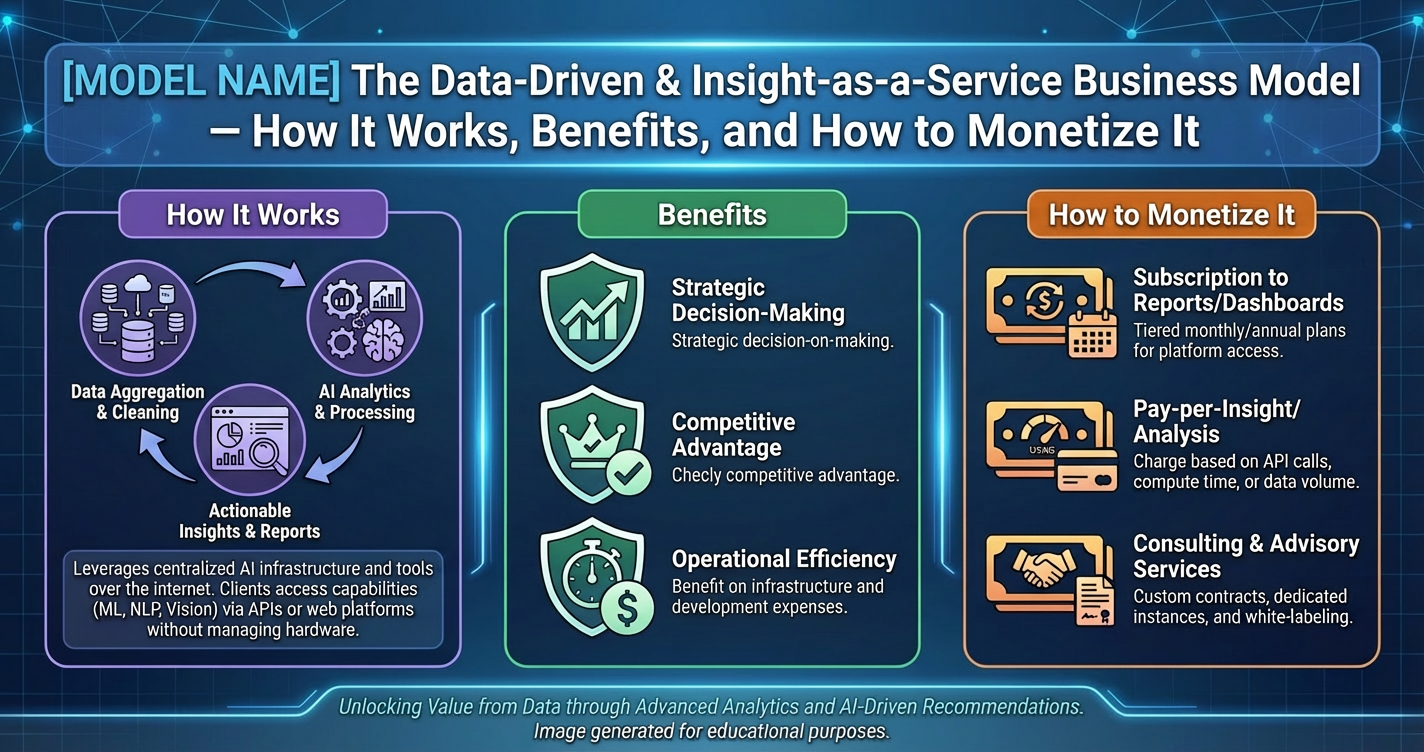
Artificial intelligence is rapidly reshaping how companies innovate, automate, and scale. Among the most transformative developments is [MODEL NAME], a next-generation AI model that enables businesses to build smarter products, streamline operations, and create new revenue streams. Whether you’re an entrepreneur, startup founder, or enterprise leader, understanding how [MODEL NAME] works—and how to monetize it—can unlock powerful opportunities.
In this guide, we break down the advantages, architecture, monetization strategies, real-world examples, and essential tools needed to leverage [MODEL NAME] as a viable AI business model.
What Is [MODEL NAME]?
[MODEL NAME] is an advanced AI model designed to perform complex cognitive tasks such as content generation, data analysis, prediction, automation, and human-like interaction. Depending on its architecture (LLM, multimodal model, agent-based system, etc.), it can process text, images, audio, or other inputs to deliver dynamic outputs and assist with decision-making.
Companies implement [MODEL NAME] to improve workflows, build AI-powered products, reduce operational costs, and scale services that previously required human labor.
Why the [MODEL NAME] Business Model Is Booming
The rise of AI across industries has resulted in major demand for models like [MODEL NAME]. Several key trends drive this growth:
AI Adoption Across All Industries
From healthcare and finance to e-commerce and manufacturing, organizations are rapidly integrating AI into their processes.
Lower Costs, Higher Efficiency
Models like [MODEL NAME] automate tasks that once required teams of employees—saving time and money while increasing output.
Scalability
AI solutions can serve thousands or millions of users simultaneously, allowing businesses to scale without linearly increasing staff.
New Revenue Streams
Companies can monetize [MODEL NAME] directly (via API access) or indirectly (via AI-powered products, SaaS tools, or workflow automation services).
Advantages of Using [MODEL NAME]
1. Cost Reduction
Automation reduces labor expenses in tasks such as customer support, content creation, coding, and data processing.
2. Enhanced Productivity
[MODEL NAME] can work round-the-clock, delivering instant insights and speeding up processes across departments.
3. Consistency and Accuracy
Unlike humans, AI produces consistent results and can be trained to maintain strict brand or compliance guidelines.
4. Personalization at Scale
AI can analyze vast amounts of data to create unique user experiences—something previously impossible at scale.
5. Faster Go-to-Market
By using AI to automate development, research, customer service, and marketing, businesses can launch products faster with fewer resources.
How [MODEL NAME] Works
The inner workings of [MODEL NAME] vary depending on its architecture, but most modern AI models follow similar principles.
1. Training on Massive Datasets
AI models are trained on diverse datasets containing text, images, audio, or code. This allows them to learn patterns and relationships between pieces of information.
2. Understanding User Input
When a user sends a prompt, [MODEL NAME] processes it using vector embeddings and deep neural layers. It interprets context, intent, and semantics.
3. Generating Responses or Outputs
The model computes probabilities to predict the most likely response. This can include:
-
Written content
-
Data insights
-
Code generation
-
Image creation
-
Recommendations
-
Predictions
4. Continuous Learning
Some models support fine-tuning or real-time feedback loops that allow businesses to customize the AI for specific use cases.
Monetization Methods for [MODEL NAME]
There are multiple revenue models that businesses can use to monetize [MODEL NAME]. Here are the most effective ones:
1. SaaS (Software as a Service)
Build a tool or platform powered by [MODEL NAME] and charge users a subscription fee.
Examples:
-
AI writing assistants
-
Automated customer service platforms
-
AI-powered analytics dashboards
-
Creative tools (image generation, video editing, etc.)
2. API Access / Usage-Based Billing
Offer [MODEL NAME] as an API endpoint with a pay-per-request or usage-based pricing model.
Companies such as OpenAI and Anthropic use this approach to scale globally.
3. White-Label AI Solutions
Sell customizable AI systems to enterprises, allowing them to integrate [MODEL NAME] into their internal tools under their own brand.
4. Consulting and AI Integration Services
Businesses can charge for:
-
AI strategy development
-
Model integration
-
AI automation setup
-
Workflow optimization
5. Licensing the Model
License [MODEL NAME] to companies across industries such as healthcare, finance, logistics, or retail.
6. Data-Driven Services
AI can analyze customer or business data to provide premium insights or predictive analytics.
7. Content and Media Monetization
Use [MODEL NAME] to produce:
-
Articles
-
Videos
-
Social media content
-
Podcasts
-
E-learning materials
Then monetize through ads, sponsorships, or premium content.
Real-World Examples of [MODEL NAME] in Action
1. Customer Support Automation
Businesses deploy AI chatbots powered by [MODEL NAME] to handle FAQs, troubleshoot issues, and escalate complex cases to human agents.
2. Marketing Automation
AI helps generate personalized campaigns, segment audiences, and optimize ad spending.
3. E-commerce Personalization
From product recommendations to tailored offers, [MODEL NAME] can dramatically increase conversion rates.
4. AI-Powered Software Tools
Models like [MODEL NAME] enable instant code generation, debugging, and documentation, improving developer efficiency.
5. Healthcare Assistance
AI can analyze patient data, generate reports, and help with administrative tasks.
6. Finance & Risk Assessment
Financial institutions use AI for fraud detection, credit scoring, and market forecasting.
Tools Needed to Build an AI Business Using [MODEL NAME]
To effectively implement [MODEL NAME] in your business model, you’ll need the following tools and infrastructure:
1. Cloud Computing Platforms
AI requires strong compute resources. Popular options include:
-
AWS
-
Google Cloud
-
Microsoft Azure
2. Vector Databases
To store embeddings and retrieve relevant content:
-
Pinecone
-
Weaviate
-
Milvus
-
Chroma
3. Development Frameworks
These tools help implement, fine-tune, or integrate AI models:
-
PyTorch
-
TensorFlow
-
LangChain
-
LlamaIndex
4. API Integration Tools
For building SaaS platforms or applications:
-
FastAPI
-
Node.js
-
Flask
-
Next.js
5. Workflow Automation Tools
Useful for connecting AI pipelines:
-
Zapier
-
Make.com
-
Airflow
6. Monitoring & Analytics Tools
To track usage, performance, and customer behavior:
-
Datadog
-
Grafana
-
Mixpanel
Conclusion
The AI business model powered by [MODEL NAME] offers tremendous potential for entrepreneurs and companies looking to innovate, automate, and scale. By understanding how the model works, the advantages it brings, and the various monetization strategies available, businesses can create powerful AI-driven products and services that deliver real value.
Whether you’re building a SaaS platform, integrating AI into enterprise systems, or launching automated tools for consumers, [MODEL NAME] can be the foundation of a long-term, highly profitable strategy.
Frequently Asked Questions (FAQ)
1. What industries can benefit from [MODEL NAME]?
Virtually every industry can use AI—including healthcare, finance, retail, logistics, manufacturing, marketing, and education.
2. How can I monetize [MODEL NAME]?
Popular monetization strategies include SaaS products, API access, consulting services, licensing, data analytics, and automated content creation.
3. Do I need coding experience to build an AI business?
Not necessarily. No-code tools now allow non-technical founders to create powerful AI solutions. However, technical skills help for more advanced customization.
4. Is [MODEL NAME] expensive to run?
Costs vary depending on usage, model size, and compute requirements. Startups often begin with low-cost API access before scaling to custom infrastructure.
5. Can [MODEL NAME] be fine-tuned for specific industries?
Yes, fine-tuning allows the model to specialize in tasks such as legal analysis, medical documentation, or financial forecasting.