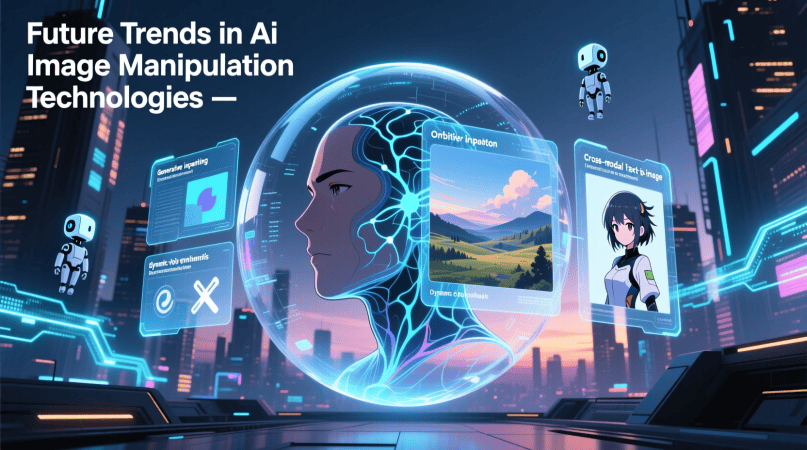
The realm of image manipulation is undergoing a seismic shift, driven by advancements in artificial intelligence (AI). From enhancing photographs to creating entirely new visuals, AI image manipulation technologies are redefining creativity and efficiency. In this article, we’ll explore the future trends, applications, and implications of these technologies.
1. The Rise of Generative Adversarial Networks (GANs)
Generative Adversarial Networks (GANs) are at the forefront of AI image manipulation. These systems consist of two neural networks a generator and a discriminator working against each other to create realistic images. Imagine a scenario where a photographer can input a few rough sketches, and the GAN transforms them into lifelike images. This technology is already being used in various fields, including fashion, gaming, and film.
Example: Art Creation
Artists are leveraging GANs to produce unique artworks. For instance, the famous “Edmond de Belamy” portrait was generated by a GAN and sold at auction for over $432,000! This showcases the potential of AI in creative sectors.
2. Enhanced Photo Editing Tools
AI is also making waves in traditional photo editing software. Tools like Adobe Photoshop are integrating AI driven features for tasks such as automatic background removal, object recognition, and even skin retouching.
Step-by-Step Guide: Using AI in Photoshop
- Open your image: Start with a high-resolution image for better results.
- Utilize the ‘Select Subject’ feature: This AI tool identifies and selects the main subject in one click.
- Refine the selection: Fine-tune edges using the ‘Select and Mask’ workspace.
- Apply AI filters: Experiment with various filters to enhance your image.
This streamlined process saves time and allows even novice users to achieve professional results.
3. Real-Time Image Manipulation
As computational power increases, real time image manipulation is becoming a reality. Technologies like augmented reality (AR) and virtual reality (VR) are integrating AI to enhance user experiences.
Example: AR in Social Media
Social media platforms like Snapchat and Instagram utilize real-time AI filters, enabling users to alter their appearances or environments instantaneously. Users can see their changes live, making the experience interactive and engaging.
4. Ethical Considerations and Challenges
With great power comes great responsibility. The rise of AI image manipulation raises several ethical dilemmas. Issues like deepfakes, misinformation, and privacy concerns are at the forefront.
Checklist: Ethical Considerations for AI Image Manipulation
- Is the image being manipulated for deceptive purposes?
- Are the subjects in the images aware of the alterations?
- Does the manipulation respect copyright laws?
- Can the alterations potentially harm individuals or communities?
5. Future Applications in Various Industries
The potential applications of AI image manipulation are vast and varied. Here are some sectors that will likely benefit:
| Industry | Application |
|---|---|
| Healthcare | Analyzing medical images for diagnoses. |
| Marketing | Creating tailored advertisements based on consumer data. |
| Gaming | Generating realistic environments and characters. |
| Education | Enhancing learning materials with interactive visuals. |
Conclusion
AI image manipulation technologies are not just a passing trend they are reshaping how we create and interact with visuals. As tools become more sophisticated, the lines between reality and manipulation blur. It is crucial for creators, marketers, and users to embrace these technologies responsibly.
For those interested in exploring the capabilities of AI tools further, check out our article on Understanding AI Tools for Undressing Images. Here, we delve into the specifics of how AI can transform images in previously unimaginable ways.
1 thought on “Future Trends in AI Image Manipulation Technologies”
Comments are closed.